
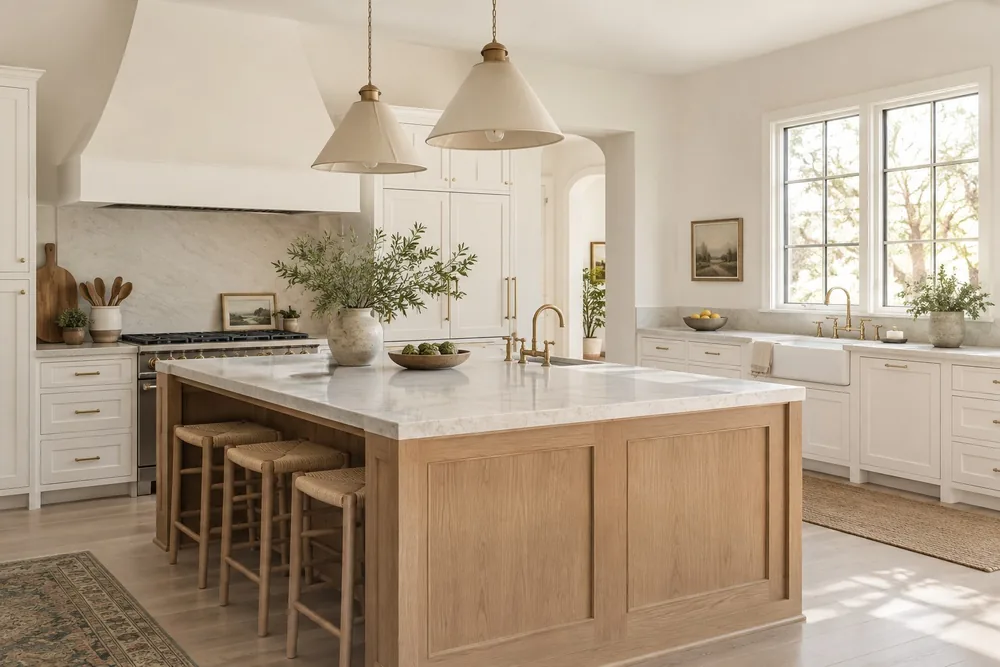
The decision for this particular color
Cedar Key can be considered for kitchen cabinets if its color and depth suit the space; the first design question is a neutral chosen from real driftwood tones. Cedar Key's driftwood description supports a muted-neutral direction but does not establish a single precise undertone for every setting.
Weathered oak and ivory linen supply a real gray-beige context, making the authentic sample more useful than guessing from the evocative name.
Put the countertop and lower door together
Make the Cedar Key cabinet trial vertical. Hold it below the counter edge, beside the backsplash and at the end panel facing the room. In a palette involving weathered oak and ivory linen, the countertop reflection and the shadow beneath it can produce quite different impressions. Compare a lower door with a tall cabinet position before deciding that the same color belongs on both.
The Cedar Key comparison to make in this room
Cedar Key has an LRV of 61.05; Benjamin Moore Smokey Taupe 983 is 54.53. The difference is 6.52 points, with Cedar Key returning more light under the reference measurement.
The condition for keeping Cedar Key
Use a physical board to judge the gray-beige balance rather than inventing an undertone from its name. The trim color comparison covers that related choice.
Select a coating intended for the actual cabinet surface and follow its preparation, priming and cure instructions. The OC-16 color code does not establish adhesion, stain resistance or cleaning performance. Approve the intended sheen on a sample door; reflections on a finished cabinet can differ from those on a flat wall board. The wood-floor pairing guide covers that related choice. Before ordering samples, compare room-planning features in the paint color visualizer roundup.
Sources & notes
Color specifications: Benjamin Moore Cedar Key OC-16. The recorded LRV is 61.05. Named comparison values come from the respective manufacturers; material schemes are editorial suggestions.
This guide reviews published color information and proposes practical sample checks. It does not claim first-hand paint testing or customer-review scores. Benjamin Moore does not sponsor or endorse this site. Product names and trademarks belong to their respective owners. Confirm the color in a physical sample and select the coating for the actual surface and finish.